Piedmont’s Gavi Wine Region: A Field Report on Italy’s Quieter Cortese Country
The Piedmont that reaches most American travelers is Barolo. It is an understandable narrowing. Barolo and Barbaresco have held the center of international attention on Italian wine for decades, and the Langhe itineraries run reliably well. The properties that welcome our clients there have long been part of our core Piedmont work.
But there is more Piedmont than the Langhe, and our 2026 portfolio refresh is bringing one of its quieter corners more fully into our offering: the Gavi wine region, a DOCG in the southeastern corner of Piedmont, just over an hour from Milan and roughly forty minutes from the Ligurian coast.
In April, our product specialist Sonia spent two days on-site at the estate anchoring this new work in the territory. The visit had been on our calendar for months. This post is her field report.
If you have been routing Piedmont clients through the Langhe for years, as we have, this is a look at where else Piedmont can take them.
What You Will Find in This Report
Why Our Team Goes First
Before any client sets foot somewhere, we do.
Site inspections in Piedmont are not about learning the territory. We have been working with producers across the Langhe and Alba for many years.
The inspections test a specific, narrower question: does this estate, this program, this operator, belong in our portfolio the way we think it does.
The answer is sometimes yes, sometimes no, and the only way to find out is to spend real time on-site with the people running the program.
The same approach shaped our recent field work across Sardinia’s interior and the borderlands of Lunezia. Gavi was the Piedmont focus this spring.
“We arrive with a working hypothesis, and the visit either confirms it or kills it. This estate had been running a program we had been tracking for some time. What we needed was to see how the different parts of it hold together when you actually spend two days there.”
— Sonia, See Italy Travel Product Team
The invitation came from the estate itself. Our team had been in correspondence for some time before the two days of 13 and 14 April were set, with a structured agenda: cellar, kitchen, grounds, art program, accommodation.
Our Approach
We do not place a property or territory in our portfolio before our product team has been on-site. When we send clients somewhere, we have been there first, we have sat with the people running the program, and we have decided the fit is real. Our 2026 Piedmont refresh has brought us back to several corners of the region this spring. Gavi was one of them.
Gavi in Piedmont: The DOCG Between the Langhe and the Ligurian Coast
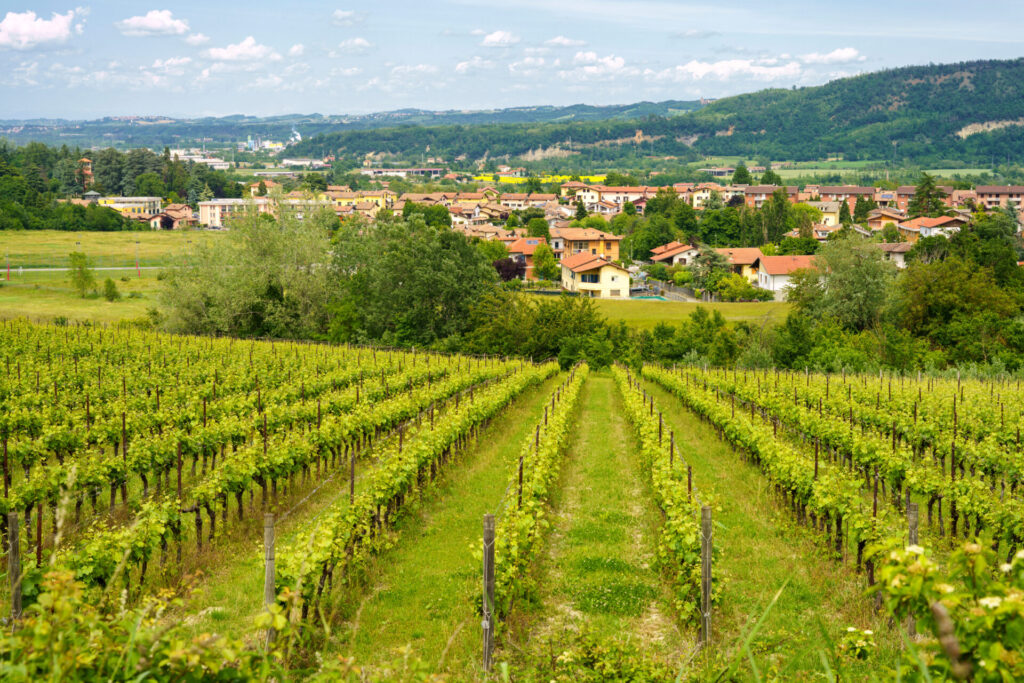
The Gavi wine region sits in the province of Alessandria, in a corner of Piedmont that most Americans will not have passed through. It is wine country, clearly, with the low rolling hills that characterize the whole region. But the topography is quieter than the Langhe’s vineyard-dense amphitheater.
The pace of the territory is different too. Traffic is lighter. The villages are smaller.
In late April, when our team was there, the vines were just breaking dormancy and the surrounding woodland was in full leaf.
The region’s wine is a dry white, made from the native Cortese grape.
The DOCG is formally Gavi DOCG, with Cortese di Gavi and the narrower sub-zone Gavi di Gavi (wine from the municipality of Gavi itself) as designations readers may have seen on bottles imported into the United States.
Gavi has been a DOCG since 1998, which places it within the top tier of Italian wine classifications alongside Barolo and Barbaresco.
Italian whites have taken longer to find an American audience than Piedmont’s celebrated reds, but that is changing.
The Italian white wine segment in the US market has grown steadily, and Gavi, with its dry, mineral-forward profile, has emerged as one of the regions importers and sommeliers are pushing more visibly. The audience that asks for Gavi by name in 2026 is materially larger than it was ten years ago.
Our read on the territory: Gavi offers what Piedmont is known for, serious wine, good food, walkable landscape, artisan production, without the itinerary congestion the Langhe carries in peak season. That combination is the reason the region is getting more of our attention this year.
-

- Rural landscape in Monferrato, Unesco World Heritage Site. Vineyard near Gavi, Alessandria province, Piedmont, italy
-
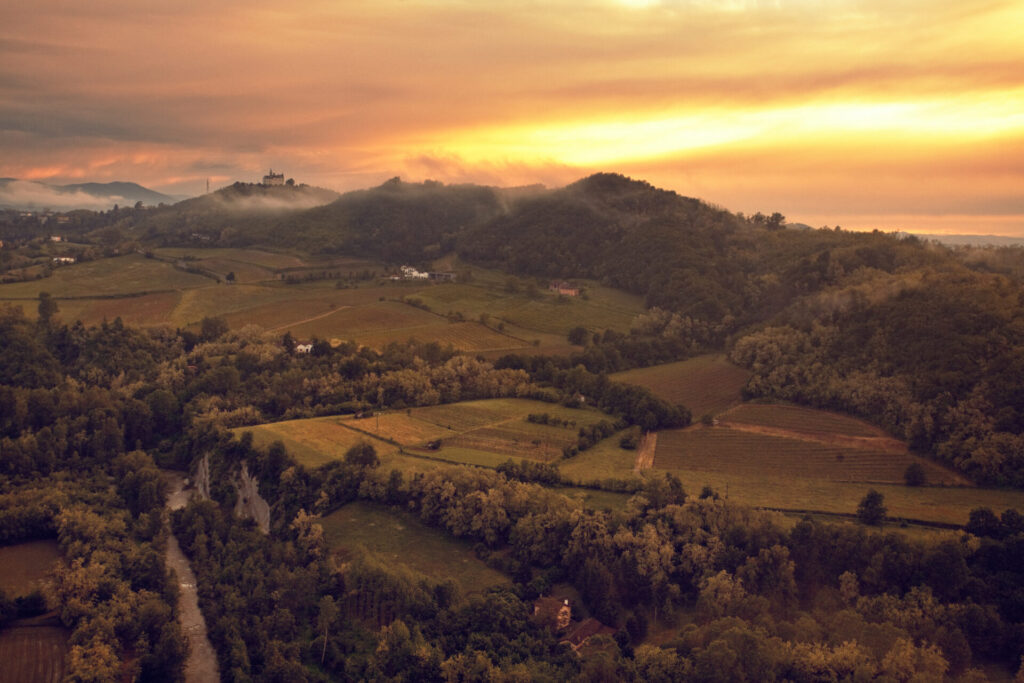
- Landscape of the stunning hillside from the village of Gavi in the mist of the sunset.
-
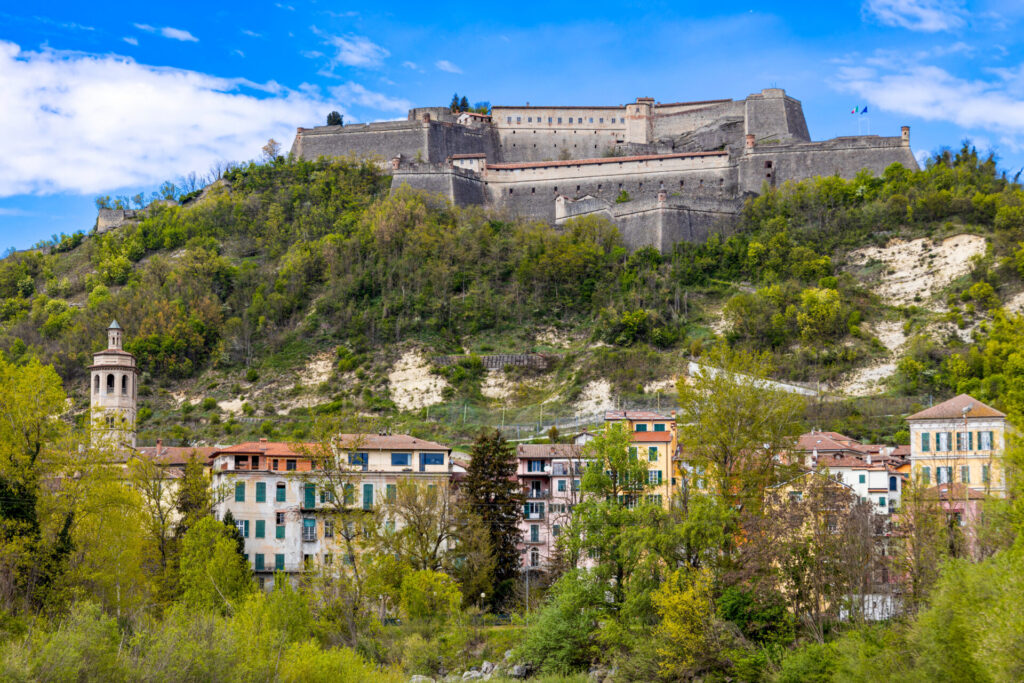
- View of the village of Gavi Ligure with the Fort, province of Alessandria, Italy
A Two-Day Assessment of the Estate
The estate anchoring this visit is Tenuta La Raia. Rather than a property review, what follows is our account of what we evaluated across two days, and what we took away about the fit.
The Cortese Cellar and the Wine Program
We began with the cellar.
The wine program operates on certified biodynamic grounds, which is no longer uncommon in Piedmont but is still executed with variable rigor across the region.
In Gavi, the dry-farming conditions and the specific expression of Cortese on these soils produce a wine structured without heaviness, one that ages far better than the standard American perception of Cortese as a young-drinking white would suggest.
We tasted across current releases and older bottlings, testing specifically whether the estate’s approach was distinctive enough to anchor a Piedmont wine stay for clients who already know Barolo and Barbaresco. Our conclusion was that it is.
For travelers interested in Italian white wine with real provenance, this is a cellar that repays a slower visit, and one that works as an anchor for a longer stay built around the estate’s broader program.
A Michelin Green Star Kitchen and the Relais
The restaurant holds a Michelin Green Star, the distinction that recognizes sustainability programs rather than culinary technique alone.
The Green Star matters to us for a reason that is easy to miss: it signals when an estate’s kitchen is coherent with the rest of its operation. A regular Michelin star can be earned anywhere in the world on technique alone; the Green Star only makes sense when the sourcing, the waste management, and the relationship with the grounds around the kitchen are working in the same direction.
In our work across Italy, we treat the Green Star as one of the indicators that an estate’s program was thought through as a whole. Here, this was the case.
The accommodation side of the property is a relais, not a grand hotel. Rooms are set into restored rural buildings on the estate, and common areas are quiet.
The overall pace is built for two, three, or four nights rather than an overnight. For clients looking for a countryside stay in Piedmont that is not the Langhe, this is the profile we would have designed ourselves.
(Access from the A7 Milano-Genova autostrada is straightforward; the final approach from Serravalle Scrivia involves a few narrow stretches, which is why we route client arrivals with a driver rather than self-drive.)
The Fondazione La Raia and the Art Itinerary
One element that had kept this estate on our desk ahead of the visit is the Fondazione La Raia – Arte Cultura.
Since 2013, the foundation has commissioned contemporary landscape art from Italian and international artists, with works installed across the property. A guided Art Itinerary walks visitors through the pieces in sequence.
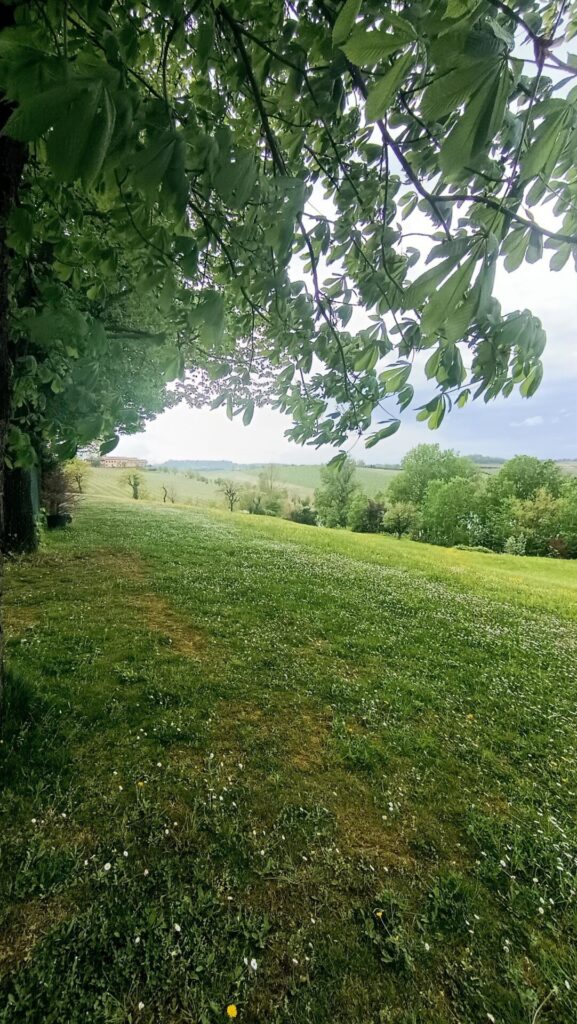
Walking the itinerary in late April, the first impression is of the integration between vineyard and art: worked rows on one side, a sculptural piece anchored in the same ground on the other. The walk moves at a pace that does not rush you through.
For the segment of our clientele that combines serious wine interest with contemporary cultural engagement, this is a meaningful differentiator. Piedmont has many celebrated wine estates. The number that run a long-term, curatorially serious landscape art program is much smaller.
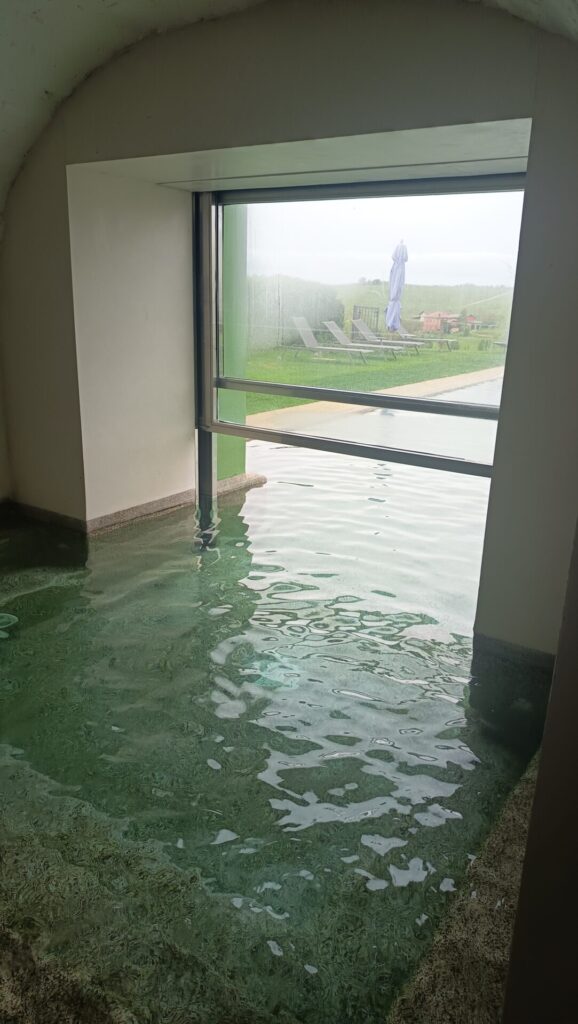
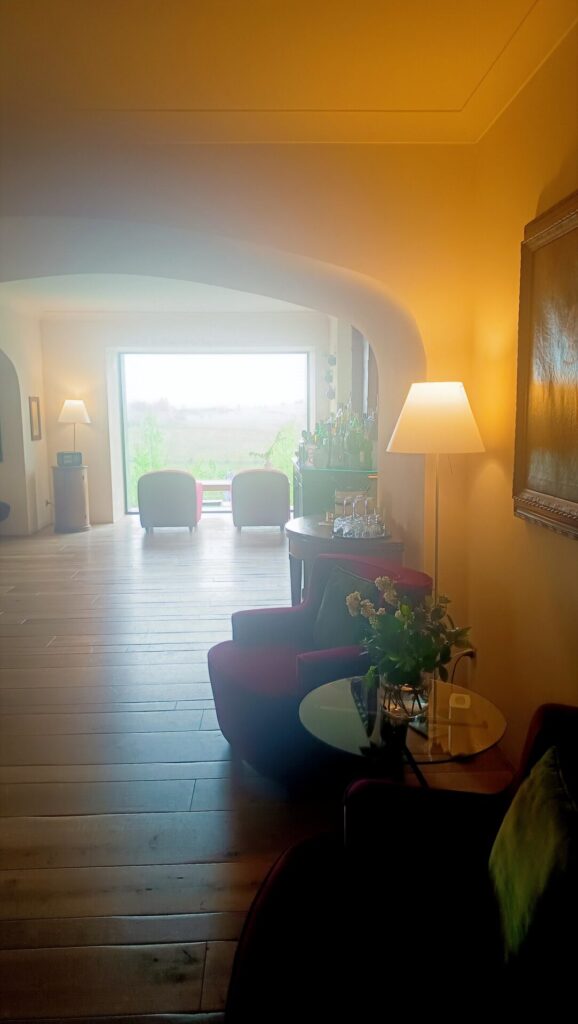
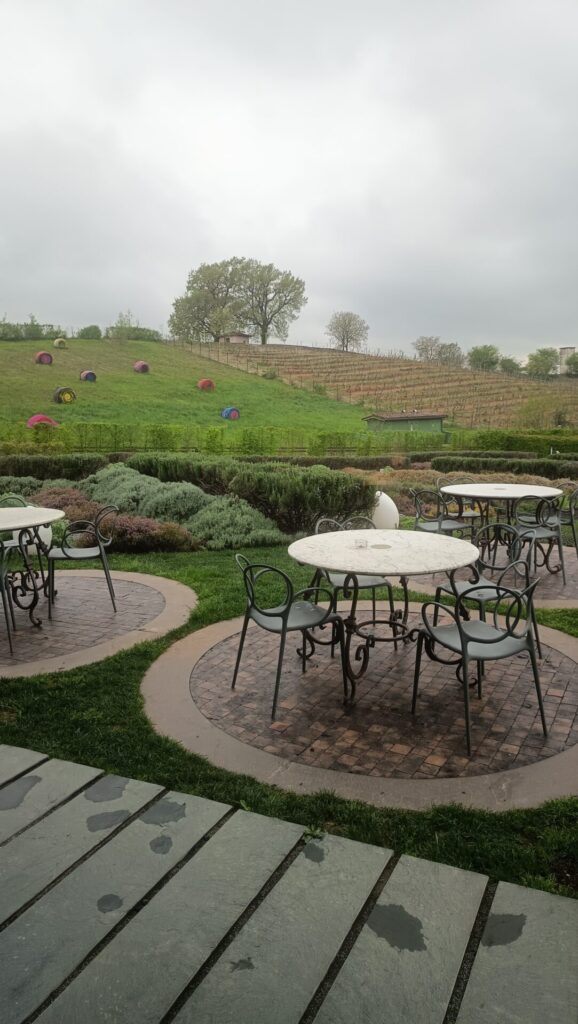
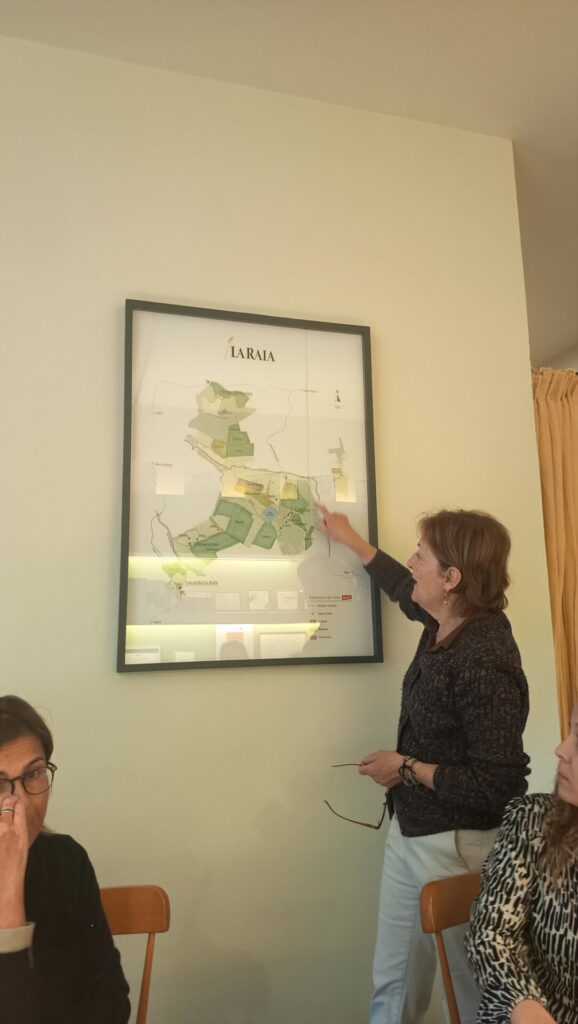
“The coherence across the estate, between cellar work, kitchen, the landscape art foundation, and hospitality, is what we came to evaluate. For advisors placing clients who want more than a tasting and a bed, having all four threads run through the same property changes how the stay actually functions.”
— Sonia, See Italy Travel Product Team
This coherence across the programs is what we came to verify, and it is why the property is being integrated more fully into our 2026 Piedmont routings.
What Advisors Should Know
Gavi is the right fit for a specific client profile: interested in wine but not chasing famous labels, curious about cultural programming, content with a slower pace than the Langhe offers in peak season. For clients whose Piedmont priority is the full Barolo-Barbaresco-Alba circuit, we continue to route the Langhe. We will tell you when Gavi is the addition and when it is the headline, because that distinction matters more to us than filling every Piedmont itinerary through the same territory.
🍇
Considering Piedmont for Your 2026 Italian Journey?
Our specialists build Piedmont itineraries that pair the Langhe’s wine heritage with newer territorial work in Gavi and beyond. Every route reflects vetting done on the ground by our product team.
Where Gavi Sits on the Piedmont Map
The practical geography of Gavi is part of what makes it interesting to us right now.
From central Milan, the drive to Gavi is approximately one hour and fifteen minutes via the A7 autostrada. From Genoa, approximately forty minutes. From Milano Malpensa, about an hour and a half.
These numbers matter, because they open three itinerary combinations that the Langhe, at more than two hours from Milan, does not serve as well.
The first is the countryside stay from Milan. For clients based in Milan for business or family, or using Milan as an arrival hub, Gavi works as a two-to-three-day countryside escape without long transit.
The logic parallels how our Florence-based clients use Chianti. For clients arriving through Milan, Gavi offers a proximate countryside stay that did not previously sit in our itinerary mix.
The second is the stopover on a Milan-to-Ligurian-coast routing. Clients heading to Portofino, Santa Margherita Ligure, or the wider Ligurian Riviera from Milan or Lake Como can intercept Gavi naturally along the way, turning what would otherwise be a four-hour drive into a considered two-night stop.
The third, and the one that matters most to the advisors we work with, is the bridge between the Langhe and the coast. For clients combining Piedmont wine time with Ligurian coast time, Gavi sits at a geometry that makes a three-territory itinerary work without backtracking.
Insider Note
The Serravalle Designer Outlet is ten minutes from the Gavi estate and is often mentioned in connection with the region. Our honest note: for clients with a specific shopping interest, particularly with access to the on-site lounge and concierge program, it is a legitimate half-day addition. For most of our Gavi itineraries, we do not route through it by default. We include it when the client profile calls for it, and we leave it out when it does not.
The same operator also runs a second Piedmont property, Tenuta Cucco, in Serralunga d’Alba, in the heart of the Langhe. For clients building a two-estate Piedmont stay, that continuity of program philosophy across locations is an advantage we can plan around. For advisors asked where to stay in Piedmont wine region outside the Langhe, Gavi is now a considered answer in our 2026 routings.
What Gavi Adds to Our 2026 Piedmont Offering
Our standard Piedmont routings will continue to center on the Langhe for clients whose primary interest is Barolo, Barbaresco, and the Alba food scene. That work is long-established.
Gavi opens combinations that the Langhe alone does not. Among the things to do in Piedmont Italy that our portfolio is now building toward:
- Multi-night countryside stays at Tenuta La Raia, paired with cellar time, the Art Itinerary, and Michelin Green Star dining
- Two-estate Piedmont itineraries combining Gavi (Tenuta La Raia) with Langhe work at Tenuta Cucco in Serralunga d’Alba
- Piedmont-to-Liguria sequences that use Gavi as a natural mid-route stop toward Portofino, Santa Margherita, and the wider coast
- Short-format Piedmont access from Milan for clients whose Italy itinerary has Milan as an anchor rather than Rome or Florence
- Culturally weighted stays for clients combining Italian wine interest with contemporary landscape art engagement
For clients planning a longer Italian journey, Gavi integrates well into a two-week Italy itinerary that pairs Piedmont with other regions. Our upcoming Piedmont FAM dates for partner advisors will reflect this work directly. Spaces will be limited, as they always are, and we expect interest from advisors who already work our Langhe routings.
🏛️
Building a Piedmont Itinerary for 2026?
Our team designs Piedmont routes that reflect decades of work in the Langhe alongside newer territorial integration in Gavi. Each itinerary is built around the client, not the template.
Frequently Asked Questions About the Gavi Wine Region
What is Gavi wine?
Gavi is a dry white wine from Piedmont, made exclusively from the native Cortese grape. Gavi DOCG (Denominazione di Origine Controllata e Garantita) is the highest tier of Italian wine classification, placing it alongside Barolo and Barbaresco in Piedmont’s protected appellations. The region, located in the province of Alessandria, received DOCG status in 1998.
Where is the Gavi wine region?
The Gavi wine region sits in southeastern Piedmont, in the province of Alessandria. It lies approximately one hour and fifteen minutes from central Milan via the A7 autostrada, and roughly forty minutes from Genoa. The region covers a compact area of low rolling hills around the municipality of Gavi, with wines from the most protected sub-zone designated Gavi di Gavi.
Is Gavi wine dry or sweet?
Gavi is a dry white wine. The Cortese grape produces a mineral-forward profile with moderate acidity and subtle citrus notes. Despite the American market’s perception of Cortese as a young-drinking white, quality Gavi from serious producers can age well, gaining complexity over several years in bottle.
How far is Gavi from Milan?
From central Milan, the drive to Gavi is approximately one hour and fifteen minutes via the A7 autostrada. From Milano Malpensa airport, about an hour and a half. This proximity makes the Gavi wine region viable as a countryside escape from Milan, or as a stopover on routes between Milan and the Ligurian coast.
When is the best time to visit the Gavi wine region?
Late spring (April to May) and early autumn (September to October) are the most rewarding times to visit the Gavi wine region. Spring brings the vineyards awakening and mild temperatures; autumn offers the harvest season and golden light. Summer remains less congested than the Langhe in peak season. Winter sees most wine estates at reduced operations.
What makes Gavi different from the Langhe?
The Langhe is Piedmont’s most internationally recognized wine territory, producing the Nebbiolo-based reds Barolo and Barbaresco. Gavi sits roughly an hour and a half to the east of the Langhe and produces dry white wine from Cortese. The two territories share the quality and tradition of Piedmont winemaking but differ in pace, congestion, and profile: Gavi is quieter, closer to Milan, and more easily combined with Ligurian coast travel.
With love from the field,
The See Italy Travel Product Team
Ready to Build Your Piedmont Itinerary?
From the Langhe’s established wine heritage to Gavi’s quieter countryside program, we design Piedmont routes shaped by years of on-the-ground work with the families and estates we trust. Let’s talk about what the right Piedmont looks like for your clients.
Are You a Travel Advisor?
We are actively broadening our Piedmont coverage through 2026, with Gavi now a live part of our itinerary work alongside our long-standing Langhe program. If you are seeing client interest in Italian wine regions beyond the most-booked circuits, or want early visibility into what we are building for 2026, we would welcome the conversation. Our partnership program includes dedicated advisor support, competitive commission structure, and direct access to our product team’s territorial notes.
Our Piedmont work has been built over many years of time with producers across the Langhe and the broader region. Gavi is not a new frontier for us. It is a corner of Piedmont we are choosing to know more completely, and to offer more carefully, in 2026.
Go back